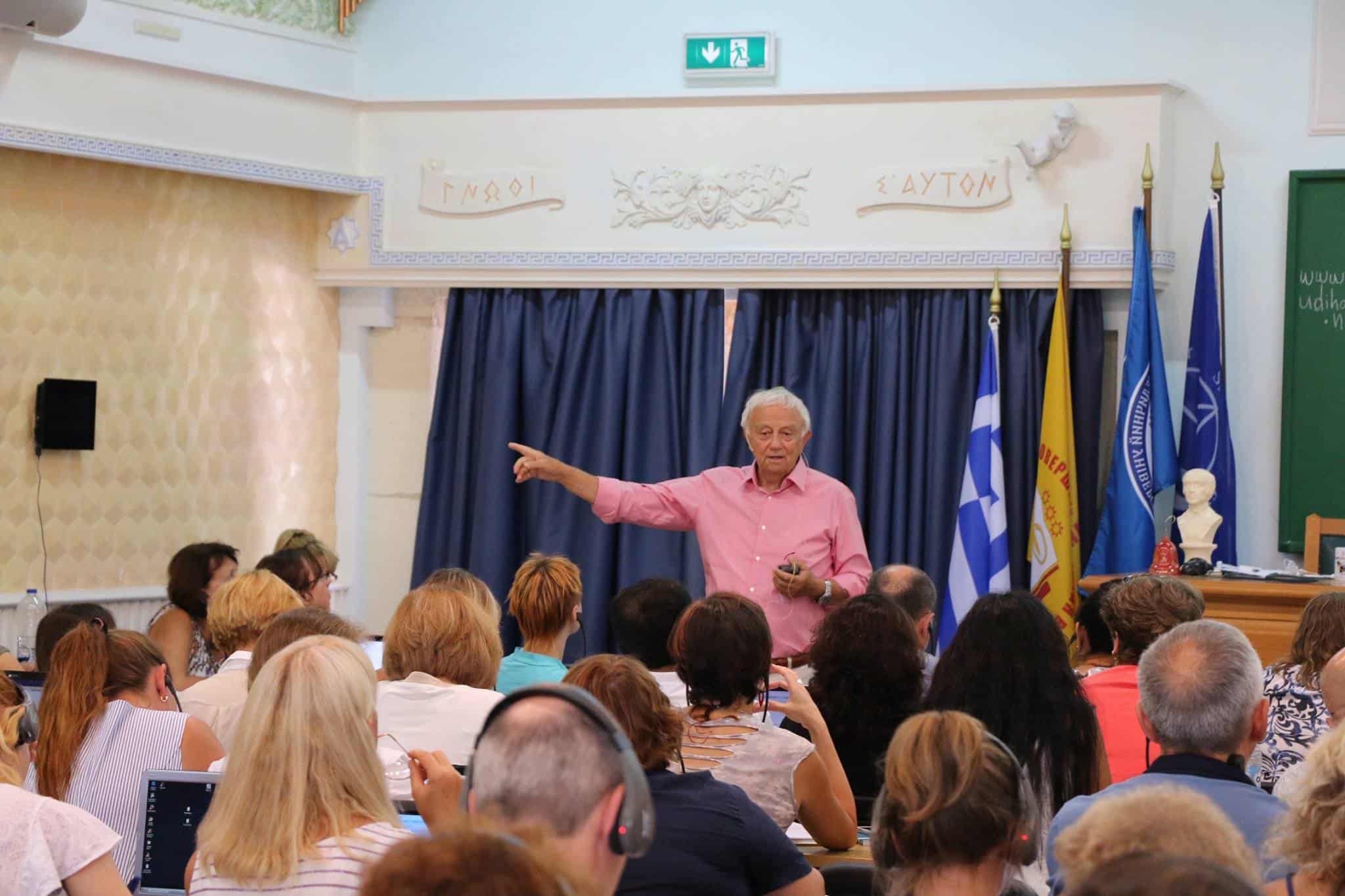
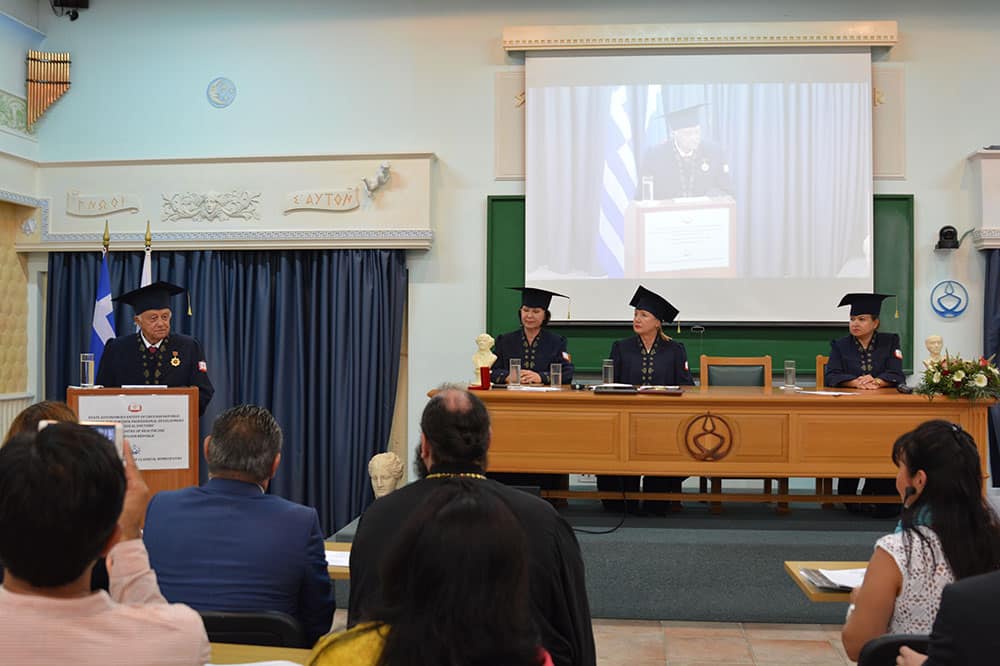
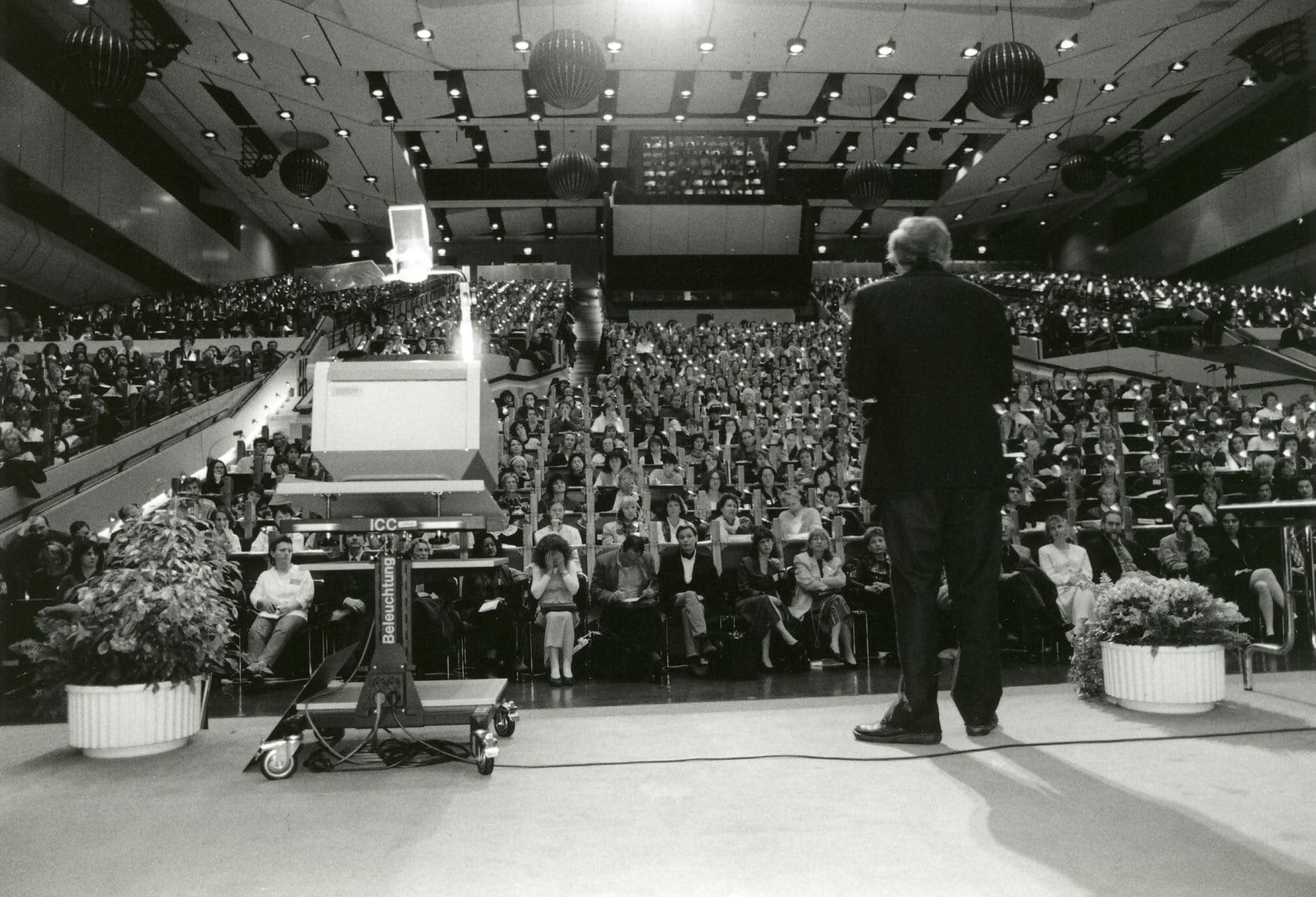
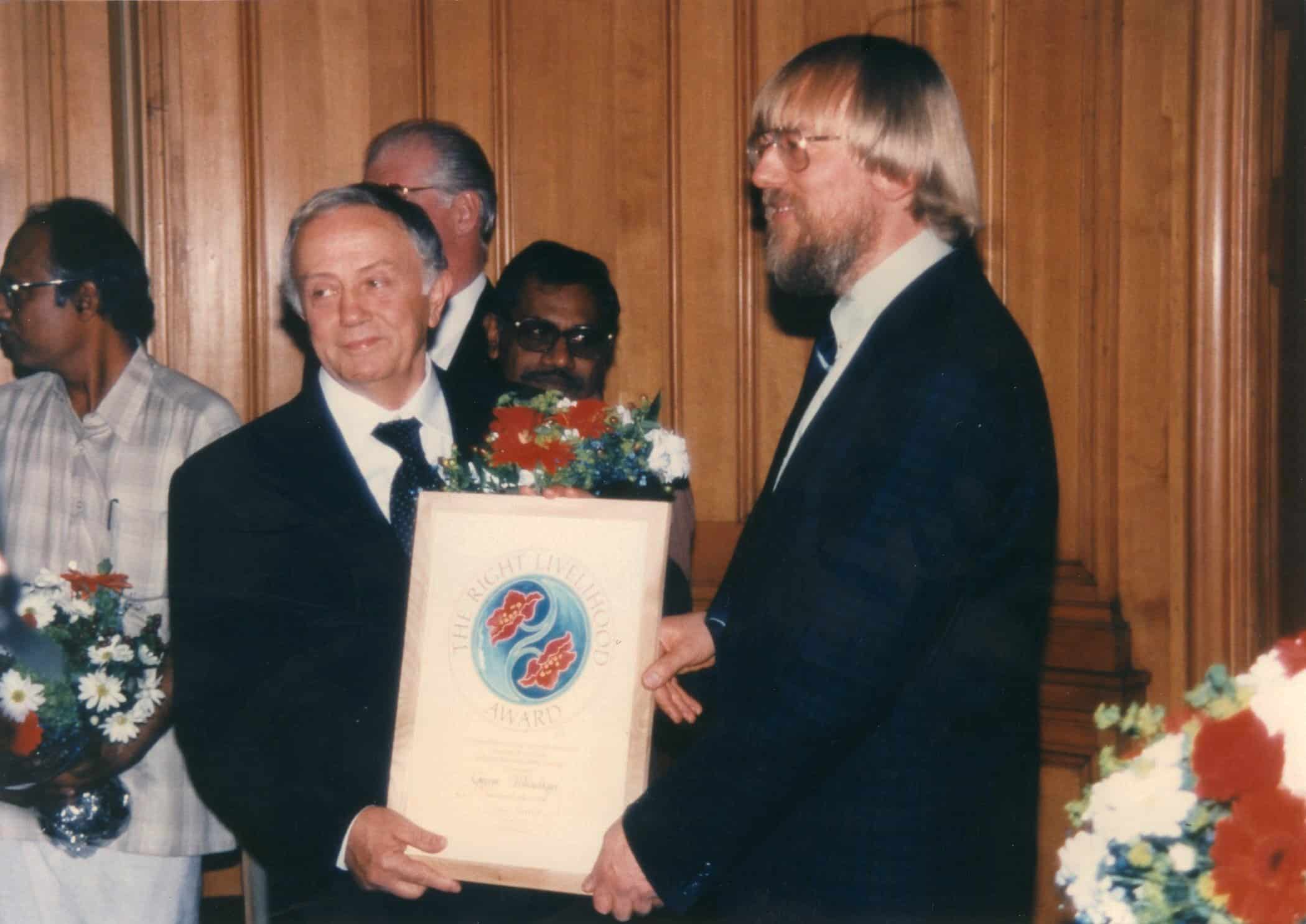
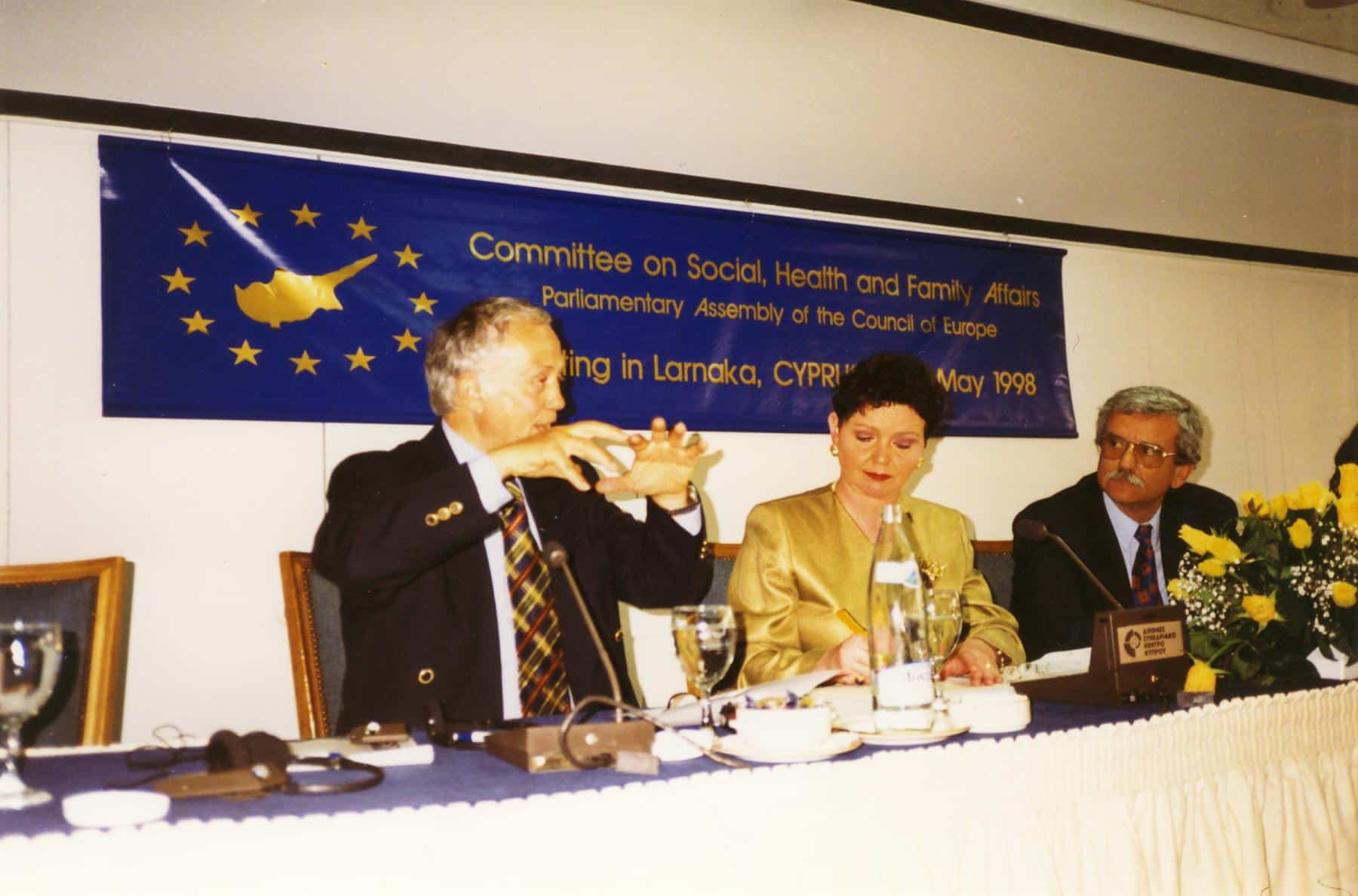
Prof. George Vithoulkas’ speech at the 101st Conference of the Faculty of Homeopathy, UK, delivered on Sunday, 22 November 2026, at 10:00 a.m. (UK time). The session was hosted by Dr Gary Smyth, Immediate Past President of the Faculty of Homeopathy.
Good morning, respected colleagues, teachers, students, and friends, President Lee Kayne, Immediate Past President Dr Gary Smyth
Today, I would like to speak about a question that is bothering me all along the last twenty years.
The question is : What kind of homeopathic education do we need in order to secure the existence and continuation of Homeopathy ?
For many years, homeopathy has been severely criticised and harassed by governments, medical associations and medical authorities. It has been criticised to the point of calling homeopathy an unscientific system or a pseudoscience.
We know that most of this criticism comes from ignorance or bias. However, we must also be honest enough to look at the problems within our own profession.
One of our biggest concerns in teaching homeopathy is the lack of standard rules on which the theory of homeopathy is based, therefore everyone feels free to inject in to the system his own perspective.
Hahnemann gave clear directions in his Organon for understanding his theory on health and disease and the laws for treating diseased individuals as well. He expected homeopaths to follow these principles carefully especially the principle of individualisation. But today, a lot of those schools or associations are not following these principles, but on the contrary are ignoring them totally.
As a result, the internet is full of different versions of homeopathy.
For instance, in correct teachings, the idea of personalised medicine should be strongly emphasised. This idea has to be understood well by the students, in homeopathy we do not treat pathologies, we treat individuals who are sick ! Ignoring this principle is like ignoring the legs on which this whole system is based.
At this moment only few schools are interested in promoting the idea of personalised medicine.
Yet all these different approaches and supposedly modern ideas are appearing in the public under the name of “homeopathy”.
This creates a serious confusion. If completely different methods are taught and used, how can we expect consistent results? And if the results are inconsistent, how can homeopathy be studied properly and promoted correctly ?
Another problem is the understanding of the word “cure” that is used loosely and its meaning becomes unclear. We cannot use the word cure when a few symptoms have disappeared.
A successful treatment should be accompanied with the sense of the whole organism going towards the correct direction. The patient, after a correct remedy, should feel as a whole in a better state of health.
Cure for a homeopath should mean that the whole person must feel better on all levels, mental emotional and physical.
The improvement should also be stable in order to confirm that the whole organism is moving towards the right direction.
It is of course understood and accepted that homeopathy, like any other scientific system must be subjected to trials in order to prove its validity.
But on the other hand, we should not be abandoned to the whims of unrelated people with strange ideas that many times are injecting in to the main body of teachings, causing a serious confusion, especially to younger students.
On the other hand, if there is a new idea, that can cause real improvement, must be respected and adapted in the main body of the teachings.
At this moment there is such a turmoil in the area of homeopathic education, where the proponents of homeopathy are battling against all kinds of irrelevant ideas that surfaced to the forefront the last years, while classical homeopathy has been pushed to the background as something difficult to be mastered.
In this way, real classical Hahnemannian homeopathy is not allowed to show its real potentials due to this total confusion that prevails at this moment in the area of education.
Scientific progress should be welcomed but we should build upon the work of Hahnemann, in the same way that happened with James Tyler Kent whose inspirational ideas was a huge jump towards the correct application of homeopathy.
But progress does not mean that we should forget the basic principles of the system. If we move too far away from those principles, homeopathy will lose its identity and will become a relic of the old.
One of greatest problem in teaching homeopathy is to find teachers who are able to demonstrate the effectiveness of homeopathy, who can differentiate between a careful prescription and a superficial one.
Another issue is a common belief that an incorrect homeopathic remedy cannot cause any harm because the remedies are highly diluted. But, we all know, that during the provings, the potentised remedy will produce a series of symptoms.
So, a wrong prescription is like a proving, especially if repeated frequently and can cause proving symptoms that may confuse the case. Therefore, after a wrong remedy, new symptoms may appear that will be mixed with the existing ones and cause a distorted overall picture.
This fact will obstruct the homeopath who is searching for the indicated remedy -the simillimum as it is termed.
The conscientious teacher of classical homeopathy will guide his students towards the target of finding the personal remedy of the patient.
This principle is the most fundamental in classical Hahnemannian homeopathy and should never be ignored.
But how this similimum can be found if a lot of mixtures of remedies are given at the same time.
Another issue is that in order to find the correct remedy, we must look beyond the pathology.
Are all these issues taught in the different schools of homeopathy? This is a really interesting question.
Always we must aim in understanding the complete symptom picture of the patient. We must consider all the patient’s physical, emotional and mental symptoms as our focus for treating a sick person.
The aim should always be especially in chronic diseases to treat the person as a whole, not simply to relieve some pain or eliminating a discomfort.
A superficially selected remedy may reduce the pain or the discomfort in an organ or area of the body and yet the overall health of the patient may not have improved.
In spite of such wrongdoing, the impression of a non-expert teacher is that the patient is doing better.
All such details that are so important are issues that should be taught in the different schools.
So the issue of having a complete and correct education is of paramount importance!
In order for a student to decide what kind of homeopathy School is presenting the best possible course, the student must undertake an investigation.
Between other concerns the student must find out whether the teachers of the school have the knowledge to treat live cases in front of the students. Whether the teacher is able to justify his decision for the prescribed remedy. But what is of paramount importance is that the students will have the possibility to see the follow up of the cases.
Another important aspect for the appearance of the school will be the number of the research papers that the School has submitted for publication.
It is imperative to know how many research papers the school has submitted in peer review medical journals, showing the effect of the homeopathic treatment.
This is the most important information that the student must have in order to decide which School to follow.
As an example, suppose a patient has chronic migraines. A remedy may reduce the intensity of the headaches, but new symptoms may appear. The patient now may develop sleep problems, digestive complaints, or unusual tiredness. In such a case, we should not look only at the headache and declare success.
We must study the case on its whole evolution in order to decide whether the direction of the patient’s evolution is heading towards the correct way.
An unsuitable remedy may cause the eruption to improve or even make it disappear, while other more serious symptoms may manifest and make the case chaotic and difficult to be treated.
This confusion is also of great concern when several remedies are given at the same time. A mixture of remedies may provide partial relief, but it becomes difficult to know which remedy is responsible for the amelioration, so we must follow with the next remedy in order to complete a cure.
The bottom line is of course how many chronic cases have been benefitted from the graduates of such a school. So actually it is the graduates that give prestige to the school.
In classical homeopathy, there are clear rules to guide the practitioner at the different stages of education.
These rules help the practitioner to understand whether the patient is moving towards a better state of health or is regressing towards a deeper state of pathology.
Without correct training, a homeopath may focus only on individual symptoms. Patients may then receive one remedy after another, for many years, without a clear improvement in their general health.
Eventually, after such wrong treatment, the case becomes complicated.
In such cases even an experienced practitioner may need great skill and patience to deal with such confused case, but the prospective student has the right to know what is required for a good teaching session.
These experiences influence the reputation of the homeopath and also the reputation of the School.
When patients do not attain consistent results, they lose confidence. Medical doctors think that this method is unreliable. Serious students may also become discouraged. In this way homeopathy is losing its best proponents.
This brings us to the main problem that we have to face today, which is the quality of education.
It is my opinion that the immediate future of homeopathy depends upon the quality of teachers, the quality of schools, and the quality of training programmes.
Today, many institutions and associations offer homeopathic education, but are the standards always up to the point?
There are courses that promise to teach homeopathy in a few weeks. Some promote fixed combinations of remedies for fixed pathologies or multiple remedies for every pathology.
As a result, new practitioners may complete their education without being prepared to manage chronic diseases. They may become disappointed when the results do not match their expectations. Their patients may also start to doubt the system not the homeopath.
Research is another important issue of this discussion.
If homeopathy is based on individualised treatment, research should try to examine its validity in a way that respects the principle of individualisation.
We must state clearly that double blind trials where the same remedy is given to everyone with the same pathology does not represent homeopathy. In this case the idea of Individualisation, is missing. Such or similar trials do not represent homeopathy.
Good research should help us discover what works, and what does not work. Case studies is the best version of research to show the curative effect of the similimum. If homeopathy wants to communicate seriously with the wider medical and scientific community should concentrate its action in doing research.
So, what should do in upgrading the acceptance of homeopathy? In my opinion, Three things:
First, homeopathic education needs to be upgraded with clear and consistent standards.
Second, schools should be evaluated by panels of experienced and responsible experts before they give permission to teach students.
Third and most important : Students should be allowed to see the follow-ups of the cases. They should study successful cases, unsuccessful cases, and cases in which the prescription had to be reconsidered.
Students learn not only from successes, but also from honest examination of mistakes.
The bottom line is that new students must choose their schools and teachers carefully.
Finally, homeopathy must remain open to progress while at the same time respect the core principles. New ideas should be tested carefully. Actually, the emphasis should be placed on publications in peer review medical journals.
Such should be the credentials of one who has the ambition to take up the mission of teaching classical homeopathy.
The future of homeopathy will not be secured by defending every practice that uses a potentised remedy.
It will be secured by clear principles, high educational standards, responsible practice, and reliable research.
If we want homeopathy to be trusted, we must first make its teachings worthy of trust.
Let us prepare practitioners who understand both the possibilities but also the responsibilities of their profession.
Let us build schools that value the theoretical knowledge, who also understand the value of the Materia Medica and can demonstrate to the students its clinical efficiency.
Only with such conditions, we can expect homeopathy to enter victoriously in to the new era of medicine.
THANK YOU